Yes. Use a sprayer or a thick nap roller with a light touch so the texture does not loosen, and prime stains first.
Popcorn Ceiling: Remove, Cover, or Repaint? What Park Ridge Homeowners Should Know
By Park Ridge Painting Service, family owned and serving Park Ridge since 1985. Last reviewed .
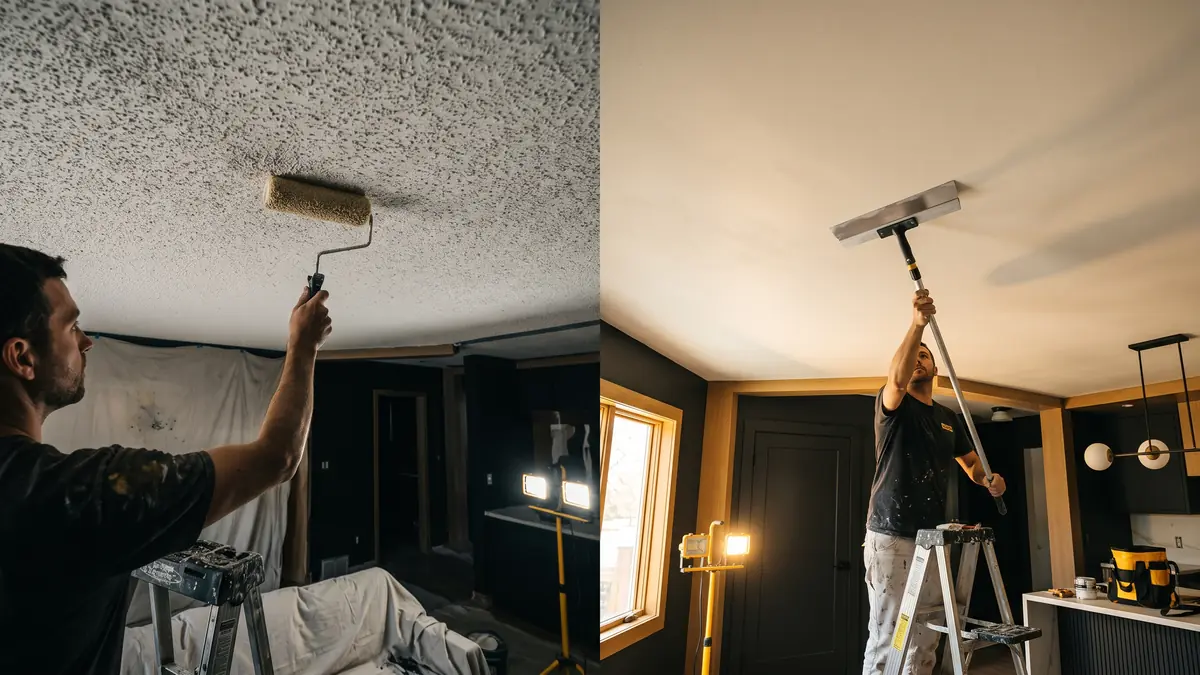
You have three real choices for a popcorn ceiling: repaint it as is, scrape it smooth, or cover it. The right one depends on the condition of the ceiling, your budget, and one safety question that has to be answered before anything is scraped, which is whether the texture contains asbestos.
Here is how each option works, the trade-offs, and what to check first.
The Asbestos Question Comes First
Popcorn texture applied before the 1980s may contain asbestos. If your home is from that era, or the ceiling has never been tested, do not scrape, sand, or drill into it until it has been tested by an accredited lab. Intact material that is not disturbed is far less of a concern than dust released by scraping. If the test is positive, removal should be handled by a licensed professional.
Your Options Compared
| Option | Best When | Trade-Off |
|---|---|---|
| Repaint as is | The texture is in good shape and you only want a fresh color | The texture stays, and it holds dust and is hard to clean |
| Scrape and skim smooth | The ceiling has tested safe and you want a modern flat look | Messy and labor-heavy, with careful prep and finishing required |
| Cover with drywall or panels | You want a smooth look without removing texture | Adds thickness and needs careful finishing at the edges |
| Patch damaged areas only | Only small areas are stained or damaged | Matching the texture is difficult |
Painting a Popcorn Ceiling
Popcorn ceilings can be repainted, and a sprayer or thick-nap roller usually gives the best coverage. Rolling heavily can loosen the texture, so a light touch and the right tools matter. A stain-blocking primer helps first if the ceiling has water or smoke stains.
Scraping and Smoothing
Removing texture is the most dramatic upgrade, and it makes rooms feel taller and cleaner. It is also the dustiest and most time-consuming option, and the ceiling underneath often needs skim coating and sanding to be smooth. Furniture and floors need careful protection, and the work should only start after the ceiling has tested safe. Our drywall repair interior painting guide explains why finishing the surface properly is what separates a smooth ceiling from a patchy one.
Covering the Ceiling
A new layer of drywall or ceiling panels can hide the texture without scraping it. This avoids disturbing the old material, but it needs careful finishing at the edges and around fixtures so it does not look added on.
How to Decide
Start with the age of the home and a test if needed. Then think about how long you will stay, how the room is used, and how bothered you are by the texture. For many homeowners, a fresh repaint is the simplest option, while a smooth ceiling is a bigger upgrade for a kitchen, living room, or sale preparation.
Planning a Ceiling Project?
Our Drywall Repair Park Ridge page covers patching and texture matching, and our Interior Painting Park Ridge page shows how we finish every room. Or call us at (847) 384-9088 for a free estimate.
Frequently Asked Questions
It might if it was applied before the 1980s. Have it tested by an accredited lab before scraping, sanding, or drilling into it.
Painting is simpler and cleaner. Removal gives a smooth modern look but is messier and more work, and must follow testing.
Yes. Covering with drywall or panels hides the texture without removing it, but edges and fixtures need careful finishing.