
Yes. Lead paint was banned for residential use in 1978. Homes built before that year may still contain it, especially on trim, windows, and doors.
Lead Paint in Older Park Ridge Homes: What to Know Before You Repaint
By Park Ridge Painting Service, family owned and serving Park Ridge since 1985. Last reviewed .
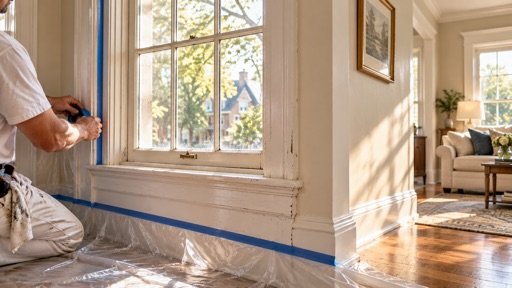
If your Park Ridge home was built before 1978, there is a real chance the paint on its trim, windows, or walls contains lead. Lead paint was banned for home use in 1978, and a large share of the homes in our area were built before that. Intact lead paint is not an emergency, but sanding, scraping, or tearing into it the wrong way is how lead dust ends up in a house.
Here is how to tell whether your home is likely affected, what federal rules say about painters working on older homes, how safe prep actually looks, and what to ask before anyone starts scraping.
Why This Matters More in Park Ridge
Park Ridge has many bungalows, Tudors, and mid-century homes with original woodwork, plaster walls, and decades of repainting layered on top of each other. Every extra coat of old paint is another chance that an early layer contains lead, and the places that take the most wear, such as window sashes, door frames, and porch trim, tend to be the places where old paint is most likely to chip or turn to dust.
How to Tell If Your Home Has Lead Paint
The age of the home is the first clue. Any home built before 1978 should be treated as possibly containing lead paint until it is tested. Homes built before 1950 are the most likely to have it in higher amounts.
There are two ways to know for sure. Hardware-store test kits can give a quick indication on a small spot, but results can be unreliable, so many homeowners prefer a lab test or a certified lead inspector for a clear answer. Either way, test before a project begins, not after the scraping has started.
Where Lead Paint Usually Hides
| Location | Why It Is a Concern |
|---|---|
| Window sashes and frames | Opening and closing a window rubs painted surfaces together and creates fine dust. |
| Door frames and doors | Constant friction at edges and latches wears paint into dust over time. |
| Baseboards and trim | Original wood trim often carries the oldest paint layers. |
| Porches, railings, and exterior siding | Weather breaks paint down into chips that fall into soil and onto walkways. |
| Kitchen and bathroom walls | Many older homes have several layers of glossy paint in rooms that were repainted often. |
What the EPA Rule Says About Painters
Under the federal Renovation, Repair and Painting rule, contractors who disturb paint in homes built before 1978 generally must be certified by the EPA, use trained renovators, and follow lead-safe work practices. The rule applies when a job disturbs more than six square feet of paint per room indoors or more than twenty square feet outdoors, and it also covers window replacement.
The contractor is also required to give you an EPA pamphlet about lead-safe renovation before work begins. If a painter has never mentioned lead on an older home, that is worth a follow-up question. Rules for homeowners working on their own home are different, but the safe work practices below are still the right way to do it.
What Lead-Safe Prep Actually Looks Like
Lead-safe work is mostly about controlling dust. The work area is sealed off with plastic sheeting, floors and furniture are covered, and paint is misted before scraping so it stays damp instead of becoming airborne. Dry scraping, open flame burning, and power sanding without a HEPA vacuum attachment are all methods the EPA rule prohibits, and heat guns that run above 1,100 degrees are not allowed either.
At the end of the day, debris is bagged, surfaces are wiped and vacuumed with a HEPA vacuum, and dry sweeping is avoided. A proper cleanup is a big part of why a lead-safe job costs more than a basic repaint, and it is worth paying for.
When Paint Can Be Left Alone
Lead paint that is intact, smooth, and not on a surface that rubs or gets hit is generally less risky than paint that is cracking or flaking. In some cases the safest approach is to repair loose areas properly and paint over the sound surface rather than strip it. What matters is the condition of the paint and how the surface is used, which is why an in-person look at the home comes before any recommendation.
Who Is Most at Risk
Young children are the most vulnerable, because they put hands and toys in their mouths and absorb lead more easily, and pregnant women are also at higher risk. If a child under six lives in or visits your home, tell any contractor up front. If you are worried about exposure, your doctor or local health department can explain blood testing.
Questions to Ask Before You Hire
Ask whether the company is EPA certified for lead-safe work on pre-1978 homes and whether it will show you proof. Ask how dust will be contained, how debris will be handled, and how the final cleanup is verified. Ask whether the price includes lead-safe prep or whether it will be added later. A clear, written answer to all three is a good sign.
Planning a Project in an Older Home?
Our Plaster Repair Park Ridge page explains how we handle cracked and aging walls, our Interior Painting Park Ridge and Exterior Painting Park Ridge pages show how we prep and finish older homes, and you can read our guide on the signs your interior needs a fresh coat of paint. Or call us at (847) 384-9088 for a free estimate.
Frequently Asked Questions
In many cases yes, if the old paint is intact and any loose areas are repaired safely first. Paint that is peeling or flaking needs lead safe prep before anything goes over it.
Contractors who disturb painted surfaces in homes built before 1978 generally need EPA lead safe certification and must follow lead safe work practices, so ask to see proof before hiring.
Home age is the first clue. For a reliable answer, use a lab test or a certified lead inspector rather than relying only on a hardware store kit.