
Yes. Cold alone is not the main cause. Repeated freezing and thawing, trapped moisture, and ice do the most harm, especially to paint that was already worn, thin, or cracked.
How Chicago Winters Affect Your Home's Exterior Paint
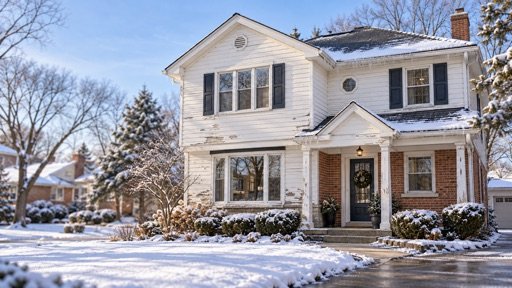
Chicago winters are hard on exterior paint. Freezing temperatures, repeated freezes and thaws, heavy snow, road salt, and months of trapped moisture all work on the finish of your home, and the damage usually shows up in spring as peeling, cracking, and bare wood.
Understanding how winter wears paint down helps you spot trouble early and decide when a repair is a small job and when it is time for a full repaint. Here is what the cold season does to a Park Ridge home and what to do about it.
The Freeze and Thaw Cycle
The biggest winter problem is not the cold itself. It is the swing between freezing and thawing. Our area can see temperatures cross the freezing mark many times in a single winter. Any water that has worked into a crack, a gap, or a bare spot freezes, expands, and pushes the paint away from the surface. When it thaws, the water drains back out and leaves a slightly bigger opening for the next round.
Wood siding and trim take the worst of it because wood absorbs and releases moisture. Paint that was already thin, chalky, or cracked has the least protection, so winter tends to find the weak spots a home already had.
Common Winter Paint Problems
Here are the problems we see most often after a Chicago area winter.
| Problem | What Causes It |
|---|---|
| Peeling and blistering | Moisture trapped behind the paint pushes it off the surface. It is most common on south-facing walls that get daytime sun and overnight freezes, and on trim near the ground. |
| Cracking and flaking | Paint and wood expand and contract at different rates in the cold. Older, brittle paint cannot keep up and splits, often along the grain or at joints. |
| Failed caulk and open seams | Caulk hardens and pulls away in the cold, which opens a path for water around windows, doors, and trim. |
| Mildew and discoloration | Shaded, damp areas such as north walls, under eaves, and behind shrubs can grow mildew over the winter months. |
| Salt and ice damage | Road salt spray and snow piled against the foundation can stain and wear paint on the lower part of the house. |
| Ice dam staining | When ice builds up along the roof edge and water backs up, it can run down the siding and soak fascia and soffit boards, leading to peeling in those spots. |
What to Check Once the Snow Melts
Walk around the house in early spring and look closely at the lower few feet of siding, the trim around windows and doors, the fascia, and the garage door and entry door. Press gently on any bubbled paint and look for bare wood, open seams, dark patches, and chalky residue when you rub a hand across the wall. Catching these early keeps a small repair from turning into rotted trim or a full replacement.
How to Protect Your Home Before Winter
The best defense is a sound finish going into the cold season. A good schedule is to finish any needed painting by mid-October, which is covered in our guide on the best time of year to paint a house exterior in Illinois. Before the cold arrives, we recommend clearing leaves and debris from gutters so water does not spill down the siding, trimming shrubs back so walls can dry, and renewing failed seams through our Caulking and Exterior Sealing service. If dirt and mildew have built up, Power Washing Park Ridge cleans the surface so any touch up bonds well.
Spot Repair or Full Repaint?
A few small peeling spots on otherwise solid paint can usually be scraped, primed, and touched up in spring. If peeling covers large areas, the wood underneath is soft, or the paint is chalky and faded across the whole house, a full repaint will protect the home better and cost less over time than repeated patching. When the damage goes deeper, boards may need replacing before any paint is applied.
Need Help After a Hard Winter?
If your paint took a beating this winter, our Exterior Painting Park Ridge page explains how we prep, repair, and repaint a home built for Illinois weather. Or call us at (847) 384-9088 or contact us for a free estimate.
Frequently Asked Questions
Moisture usually gets behind the paint through cracks, failed caulk, or bare spots. It freezes, expands, and pushes the paint off the surface. Poor prep or old paint can make it worse.
We do not recommend it. Cold, damp conditions keep paint from curing properly. Spring and fall give a longer lasting finish, and winter is a good time to plan the project and book a start date.
It depends on the siding, the paint, and the exposure, but many homes need attention every several years. Regular checks each spring help you catch problems early and spread out the cost.